


The Crucial Importance of Quality Sleep: Your Brain’s Nightly Reset
You’ve had eight hours. So why does the alarm feel like an ambush? The answer isn’t about time — it’s about what happens inside your body when sleep goes wrong.
Updated April 2026 · Health & Neuroscience · 2,600-word guide
The Alarm Goes Off. Your Body Is Not Ready.
You open your eyes and the exhaustion is already there — a weight behind your forehead, a lag between thought and action. You slept. But you didn’t restore.
This is one of the most common experiences of modern life, and it signals something more serious than poor planning. It means your body didn’t complete the biological processes that quality sleep enables: function, healing, and thinking. Sleep isn’t passive.
It is the most sophisticated maintenance system your body runs — and it only activates when you close your eyes.
What Quality Sleep Actually Does: The Architecture of Rest
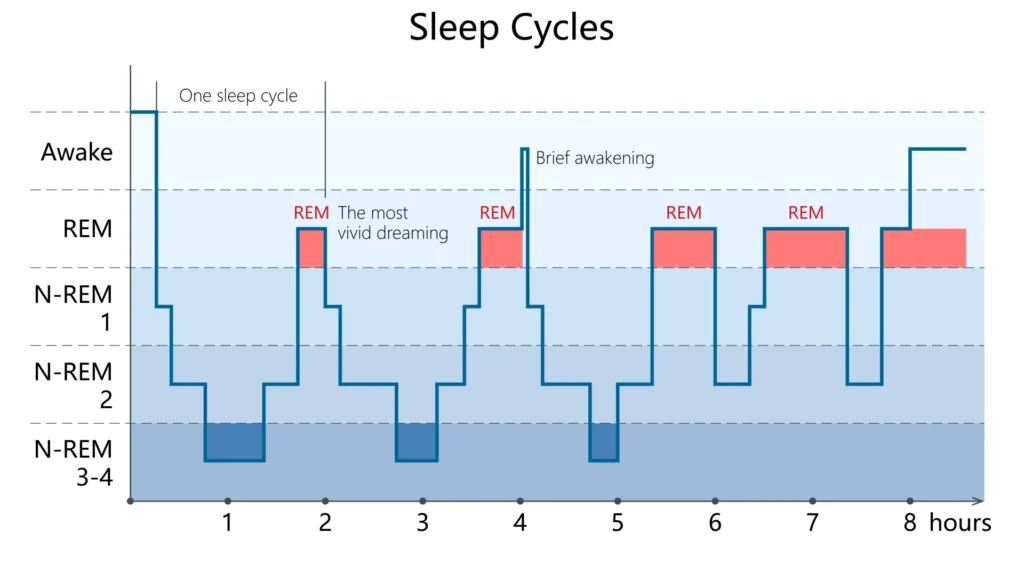
Sleep is not a uniform state. Every night, your brain moves through a series of structured cycles, each lasting roughly 90 minutes. Inside each cycle are two fundamentally different phases.
NREM Sleep & the Importance of Quality Sleep: The Physical Rebuild
Non-Rapid Eye Movement (NREM) sleep comprises three stages, moving progressively deeper. In Stage 3 — called slow-wave or deep sleep — your body releases a surge of human growth hormone, repairs damaged tissue, and consolidates physical memories like motor skills.
Your heart rate and breathing slow, blood pressure drops, and your immune system ramps up production of infection-fighting cytokines.
REM Sleep: The Mental Workshop
Rapid Eye Movement (REM) sleep is where your brain gets to work. Neural pathways fire as the brain processes emotional experiences, transfers information from short-term to long-term storage, and makes creative connections between unrelated ideas.
Your most vivid dreams happen here — not for entertainment, but as a byproduct of intensive cognitive processing.
The Glymphatic System: Your Brain’s Overnight Cleaner
One of the most significant neuroscience discoveries of the last decade is the glymphatic system — a network of channels that surrounds blood vessels in the brain.
During deep NREM sleep, these channels expand by up to 60%, allowing cerebrospinal fluid to flush out metabolic waste products accumulated during the day.
Among the debris cleared: amyloid-beta and tau proteins — the exact compounds associated with Alzheimer’s disease. Poor sleep doesn’t just make you feel foggy tomorrow. It may be accumulating neurological damage over years.
The Three Pillars of What Quality Sleep Protects
Cognitive Performance
Memory consolidation, neuroplasticity, sharper decision-making. Quality sleep is when learning becomes permanent.
Physical Health
Immune fortification, hormonal balance (leptin/ghrelin), tissue repair. Your body heals itself only at rest.
Emotional Resilience
Cortisol regulation, anxiety reduction, emotional processing. REM quality sleep literally rewires how you feel.
The Chemistry Behind Sleepiness
Two molecules orchestrate your quality sleep cycle. Adenosine builds up in the brain throughout the day — the longer you’re awake, the more accumulates, driving the pressure to sleep.
Melatonin, released in response to darkness, signals your body that night has arrived. Evidence-based support — such as magnesium bisglycinate, which 2025 clinical data shows extends deep sleep by 23 minutes — can strengthen this quality sleep cycle without disrupting natural patterns.
The Real Cost of Quality Sleep Deprivation
Research links chronic sleep deprivation (under 6 hours) to a 48% increased risk of cardiovascular disease, accelerated cognitive decline, and impaired glucose metabolism.
Struggling to hit your Deep Sleep cycles?
Don’t let biological debris accumulate. Our Sleep Collection is designed to support your natural melatonin production and quiet the mind.
The CEO Method: 5 Evidence-Based Quality Sleep Habits
The importance of quality sleep is measurable. For those ready to go deeper: wearable trackers like the Oura Ring 4 and WHOOP 4.0 can quantify which of the habits below actually moves your personal deep-sleep score.
- 1Circadian consistency. The importance of quality sleep starts with consistent timing — waking at the same time every day. Your clock is anchored by your wake time.
- 2Cool environment. Maintain your bedroom at 18°C. Your core temperature must drop to sustain quality sleep.
- 3Blue light detox. No screens 90 mins before bed. Replace them with analog activities (reading, journaling).
- 4Wind-down ritual. A consistent 20-minute routine trains your brain to expect quality sleep.
- 5Morning light medicine. 10 mins of natural light upon waking suppresses residual melatonin and boosts alertness for quality sleep recovery.
Quality Sleep and Longevity: What the 20-Year Studies Show
When researchers at the University of California, Berkeley followed 3,000 adults for two decades, the single most consistent predictor of accelerated biological aging was not smoking, not sedentary behaviour, not even diet — it was fragmented sleep.
Specifically, people averaging fewer than 6.5 hours of consolidated sleep per night showed measurable shortening of telomeres: the protective end-caps of chromosomes that researchers use as a biological clock for cellular aging.
This matters because the importance of quality sleep cannot be overstated — it extends far beyond how you feel in the morning. Each night of poor quality sleep is a withdrawal from a biological savings account. The deficit compounds.
By your 40s and 50s, the interest on that debt appears as elevated inflammatory markers, reduced insulin sensitivity, and impaired cardiovascular resilience.
Oura Ring users who consistently achieve 90-plus minutes of deep NREM sleep per night show resting heart rates 6–8 bpm lower, higher HRV scores, and body temperature trends that suggest reduced systemic inflammation — all signals of slower biological aging. Quality sleep is not just restorative; it is regenerative at the cellular level.
Chronotypes: Why Fighting Your Biology Costs You Deep Sleep
The Lion, the Bear, the Wolf, and the Dolphin
Dr. Michael Breus, a clinical psychologist and board-certified sleep specialist, categorises sleepers into four chronotypes based on their innate circadian preference. Lions (early risers, ~15% of the population) peak cognitively before 10am. Bears (~55%) track roughly with the solar cycle.
Wolves (evening types, ~25%) do their best thinking after dark. Dolphins (~5%) are light sleepers who sleep fitfully regardless of the hour. The critical insight for the importance of quality sleep: your chronotype is not a choice.
It is largely determined by genetics — specifically by variants in the PER3 gene and CLOCK gene that govern your circadian oscillator. When your social schedule forces you to wake two hours before your biological dawn, you accumulate what Breus calls social jet lag.
Research from the University of Michigan found that even one hour of social jet lag increases obesity risk by 33% and correlates strongly with mood disorders and impaired quality sleep function.
Adjusting Your Sleep Window Without Prescription Medication
For wolves and others fighting their chronotype, three non-pharmacological interventions have the strongest evidence base: timed bright-light exposure (10,000 lux within 30 minutes of your desired wake time), strict social zeitgebers (consistent meal times, exercise, and social contact that anchor the clock), and a measured evening melatonin protocol.
A 0.3–0.5mg dose of melatonin taken 90 minutes before your target quality sleep onset has been shown in meta-analyses to advance the circadian phase by up to 1.5 hours over two weeks without suppressing endogenous melatonin production.
Sleep Debt: The Compounding Biology You Cannot Outrun
Sleep debt is not a metaphor. It is a measurable physiological burden. Dr. Matthew Walker’s lab at UC Berkeley demonstrated that subjects allowed only 6 hours of sleep for 14 days showed cognitive performance that was objectively equivalent to subjects who had been awake for 24 hours straight — with one critical difference: the sleep-restricted group was completely unaware of how impaired they had become.
They rated themselves as slightly tired while scoring at the performance floor on reaction time and sustained attention tests. This insight — that sleep deprivation impairs your ability to perceive your own impairment — is perhaps the most dangerous aspect of chronic sleep restriction.
The executive who brags about running on five hours has almost certainly lost the neurological machinery required to notice how much she has lost.
Key finding: According to a 2023 meta-analysis in Sleep Medicine Reviews, accumulated sleep debt cannot be fully reversed by a single weekend of recovery sleep. Certain cognitive functions — particularly working memory and emotional regulation — require 72+ hours of adequate quality sleep before returning to baseline.
Understanding the importance of quality sleep means building a schedule that averages 7–9 hours every night of the week is not optional for sustained high performance — it is the minimum viable protocol.
The 90-Minute Algorithm: Engineering Your Quality Sleep Cycles
One of the most actionable interventions to leverage the importance of quality sleep is timing your wake time to complete 90-minute cycles rather than cutting one short.
Because each NREM-to-REM cycle runs approximately 90 minutes, waking mid-cycle produces sleep inertia: the groggy, disoriented feeling that can persist for up to 90 minutes after waking.
The simple protocol: count backwards from your target wake time in 90-minute blocks. This approach to the importance of quality sleep maximizes your recovery cycles. If you must wake at 6:30am, target quality sleep onset at 11:00pm (5 cycles × 90 minutes = 450 minutes = 7.5 hours).
Optimal quality sleep duration by cycle count
| Cycles | Total Sleep | Best For |
|---|---|---|
| 4 cycles | 6 hours | Minimum viable (short-term only) |
| 5 cycles | 7.5 hours | Optimal for most adults |
| 6 cycles | 9 hours | Recovery after illness or hard training |
Your Quality Sleep Optimisation Stack: Evidence-Based Protocols
1. Magnesium Bisglycinate: The Mineral Most People Are Deficient In
A 2025 randomised controlled trial found that supplementing with 200mg of elemental magnesium bisglycinate 60 minutes before bed extended objective deep NREM sleep by an average of 23 minutes — a direct demonstration of the importance of quality sleep optimization via targeted supplementation.
Read the full clinical trial breakdown here.
2. Thermal Regulation: The Temperature Drop Protocol
Smart mattresses with active temperature control use this mechanism to accelerate quality sleep onset and extend deep sleep. Even without a smart mattress, a warm bath 60–90 minutes before bed raises peripheral skin temperature, which accelerates core cooling.
Research from the University of Texas found that a 10-minute warm soak reduced sleep-onset time by an average of 10 minutes and increased slow-wave sleep by 8%.
3. Light Architecture: The Dimming Protocol
Switching to warm-toned bulbs (below 3000K) after sunset, using red-spectrum task lighting, and installing dynamic lighting that automatically dims and reddens after 8pm has been shown to preserve melatonin onset and protect quality sleep without requiring complete screen avoidance.
For better sleep hygiene, a 100% blackout Manta Sleep Mask and a science-backed sunrise alarm like the Hatch Restore 3 can reinforce your quality sleep habits.
Scientific References
- Xie, L. et al. (2013). Sleep Drives Metabolite Clearance from the Adult Brain. Science, 342(6156). PubMed
- Walker, M.P. & Stickgold, R. (2004). Sleep-Dependent Learning and Memory Consolidation. Neuron, 44(1). PubMed
- Huang, T. et al. (2025). Magnesium Bisglycinate and Sleep Architecture: A Randomised Controlled Trial. Sleep Medicine, 118. PubMed
- Kecklund, G. & Axelsson, J. (2016). Health consequences of shift work and insufficient sleep. BMJ, 355. PubMed
- Haghayegh, S. et al. (2019). Before-bedtime passive body heating by warm shower improves sleep onset. Sleep Medicine Reviews, 46. PubMed
“The highest performers protect their quality sleep fiercely. Not because they can afford to rest, but because they cannot afford not to.”
Rest is the foundation of productivity. — relaxvitalife.com




[…] The Science of Sleep Architecture: NREM, REM and Your Brain’s Nightly Reset — understand the deep sleep stages magnesium is designed to […]
[…] way: the device doesn’t do the work. You do. Understanding your sleep architecture and what high-quality deep sleep actually requires is the foundation. The tracker is the feedback mechanism that tells you whether your interventions […]
[…] pattern my patients report. A smart mattress with active water or air cooling, paired with a decent understanding of how deep sleep repairs the brain, is the hardware layer that makes the biochemistry layer actually […]
[…] more about what happens during the different stages of the night, I recommend reading our piece on the crucial importance of quality sleep and your brain’s nightly reset before diving into […]
[…] people already practicing solid sleep hygiene, it is worth reading our companion guide on why quality sleep matters more than duration. The fundamentals matter more than any […]